Selected Works
Tell the Truth and Run Away
Ten selections, 2014–2026: four photographs and six digital compositions.
Titles, dates and histories follow the September 2026 curatorial review of the artist's work,
with artist corrections incorporated. Selection notes are curatorial interpretations.
01 / 10
Self Portrait: Overpass
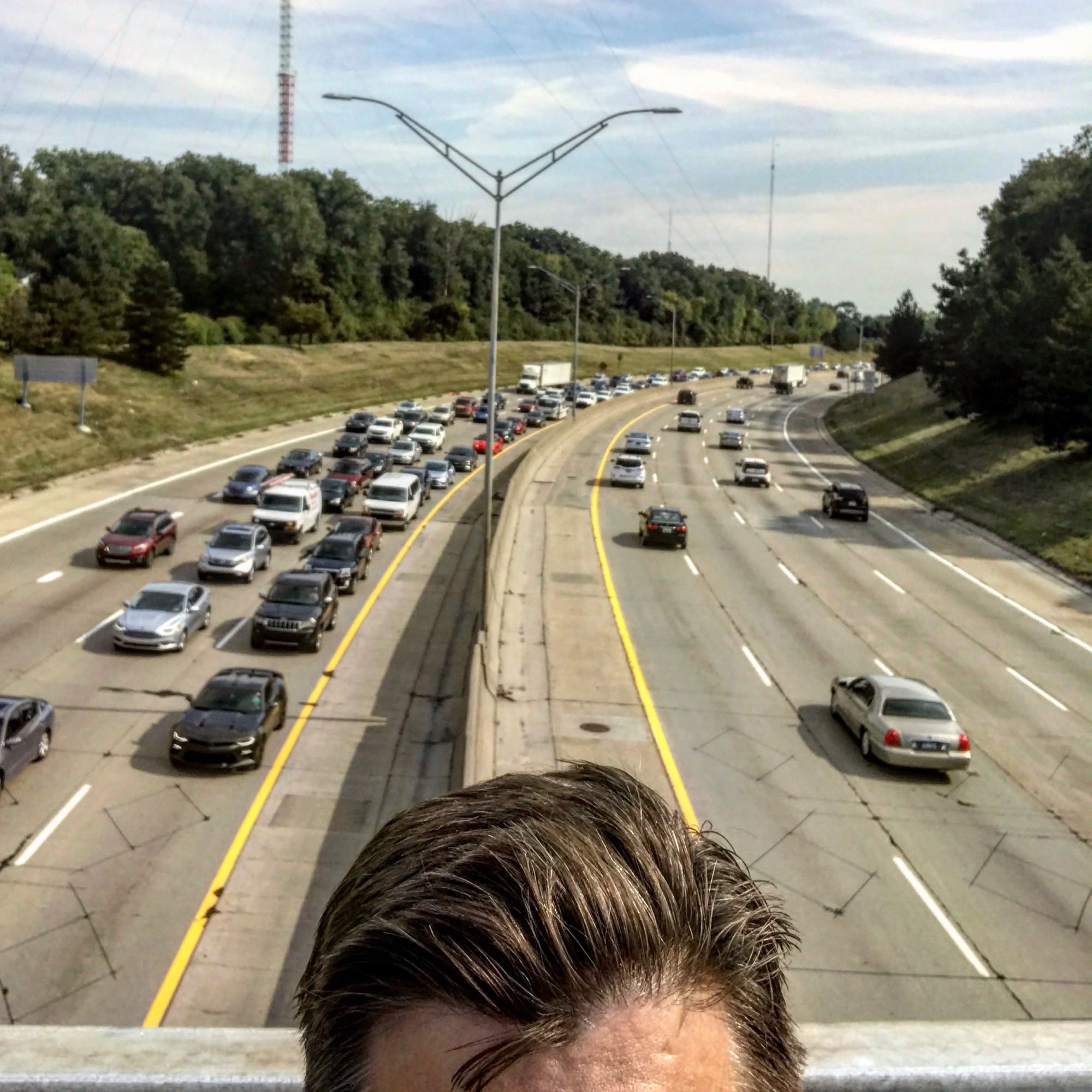
Made while the artist was unemployed and taking a bicycle ride to clear his head, this photograph follows the hair-selfie practice's deliberately incorrect framing: forehead and hair enter, while the face stays outside the picture. Sullivan knelt on the footbridge to bring his head into alignment with the railing. The freeway curves in one direction and the hair in the other, giving the surrounding world precedence over the sitter.
Why it is here
A head at the edge of a highway view: the surrounding world takes precedence over the sitter. This establishes the practice through a concrete encounter rather than a slogan.
02 / 10
Hair Selfie In Fenton
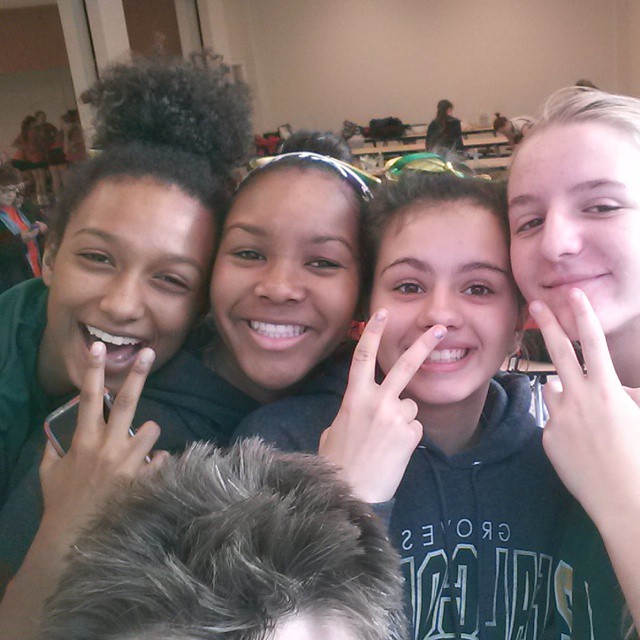
An early photograph from a project that began when the artist's daughters asked him to take selfies. His response was to make them deliberately badly: hair and forehead instead of a face. Made at a volleyball tournament where he helped serve the team lunch, the photograph places that framing experiment inside an ordinary social occasion. Other people offer their faces while the artist contributes hair. The recurring device began as a dad getting the selfie wrong.
Why it is here
An early social photograph complicates the later resistance narrative. Other people offer their faces while the artist contributes hair: conviviality and unequal visibility share the frame.
03 / 10
Self Portrait Reflection Of Internet Fulfillment
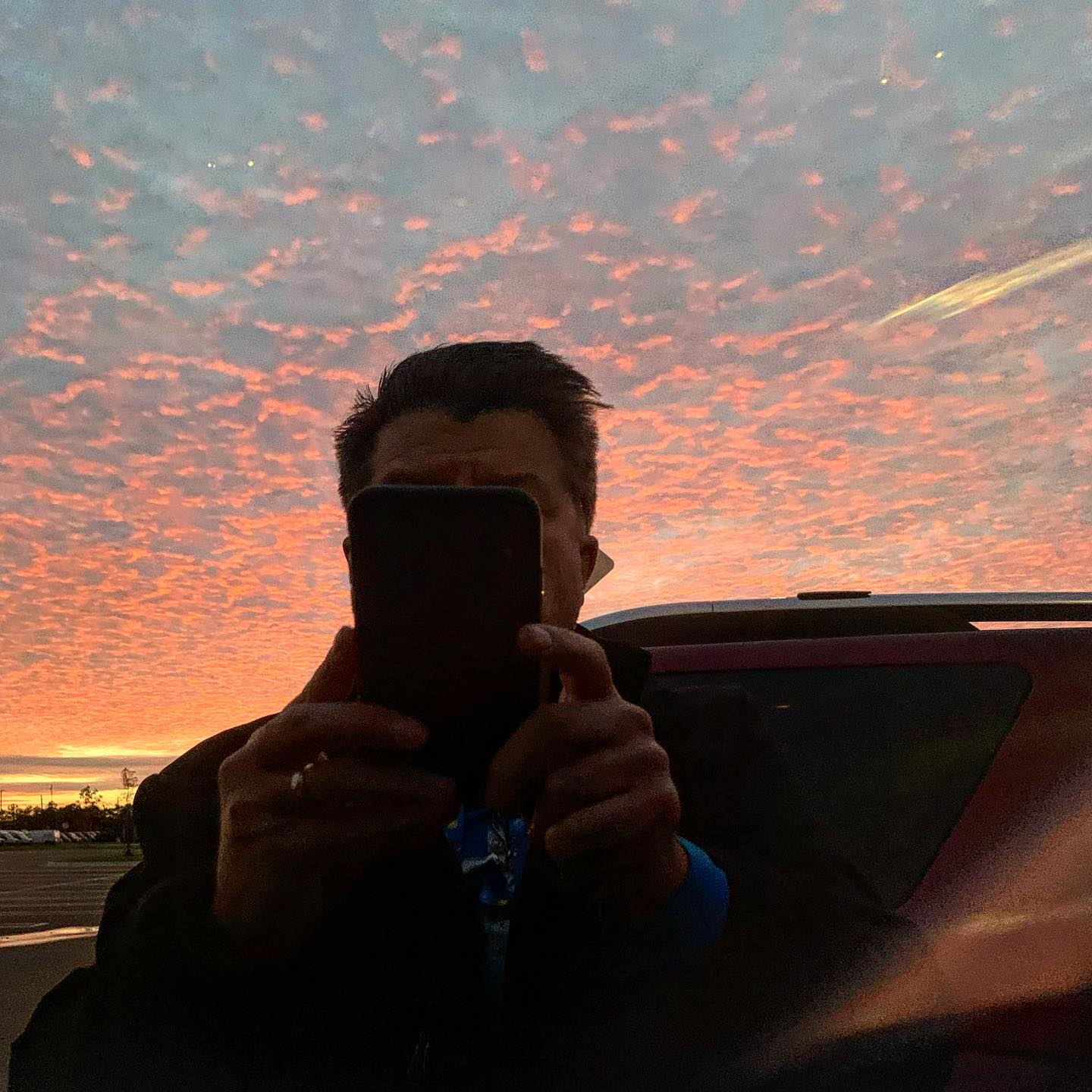
Six to seven years into the hair-selfie project, Sullivan introduced a constraint: make pictures in Amazon fulfillment-center parking lots before and after shifts. This sunrise photograph was made before a shift began. The rule required him to find beauty and artistic satisfaction within the parking lot. The phone both makes the picture and conceals the face; the reflected vehicle and sky place the continuing self-portrait practice within the landscape of shift work and internet fulfillment.
Why it is here
The phone both makes the picture and conceals the face. A reflected vehicle and luminous sky connect image-making to the ordinary material world around it.
04 / 10
Self Portrait Tourist In Art Gallery
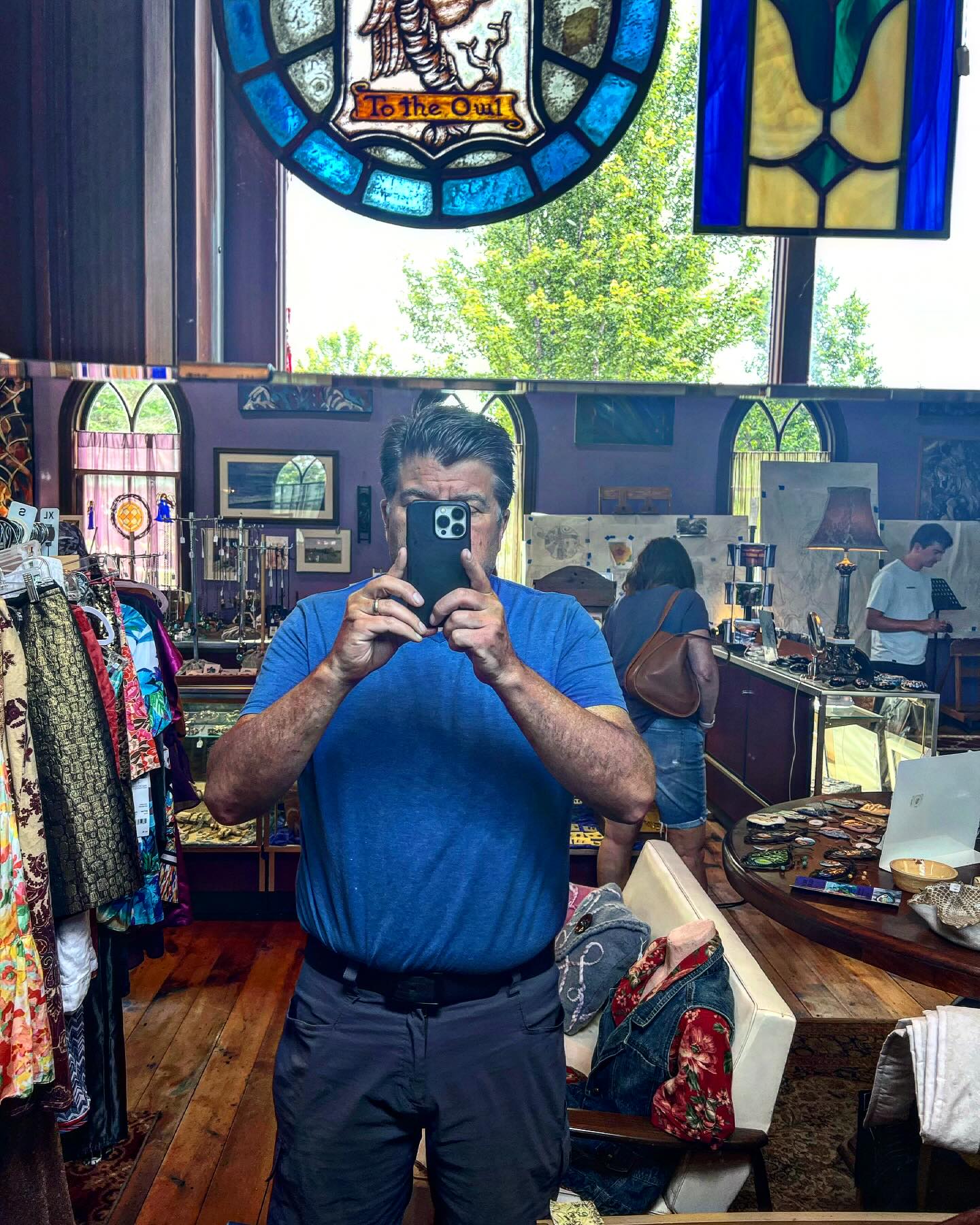
Made during a family summer trip through Michigan's Thumb, this self-portrait places the artist centrally inside White Church Gallery, beneath the stained-glass “To the Owl.” The phone hides his face while his body occupies the middle of the frame. Looking at art and antiques becomes ordinary tourist activity. The photograph extends a series that also includes travel pictures made on planes and in airports.
Why it is here
The artist becomes an ordinary participant in art-viewing and tourism. A central body and obscured face complicate the idea that this practice always withdraws from the center.
05 / 10
A Street Remembered in Advance
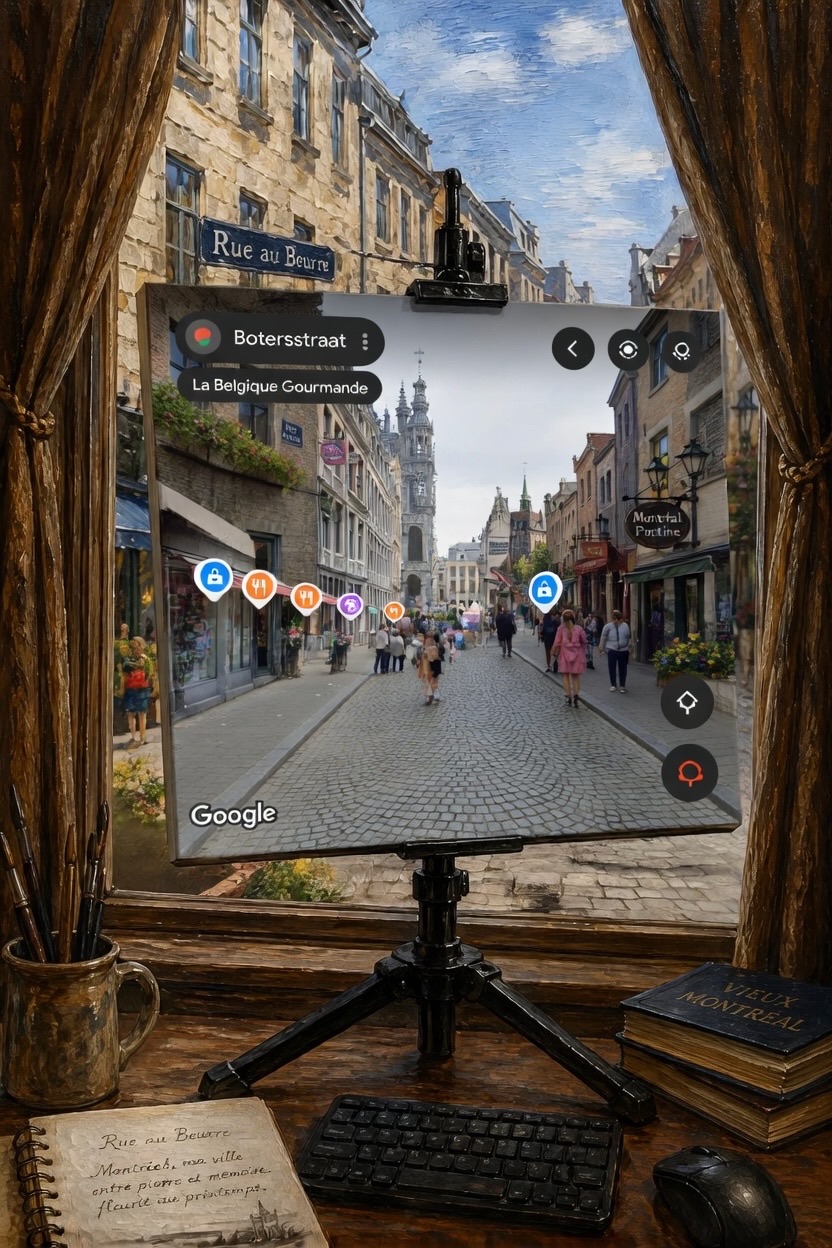
Beginning with a Google Street View screen capture, the work places an online view of Brussels in tension with a painted interpretation of the same place. The painterly surface evokes atmosphere and memory while the pictured interface retains the appearance of structured navigation. The series considers how a street can be encountered online and committed to memory before a physical visit: arrival becomes a confirmation of something already seen.
Why it is here
A navigation screen takes the place of a painted canvas. The pictured street, easel, keyboard and brushes bring physical and mediated looking into an uneasy alignment.
06 / 10
Hair Defeats Recognition
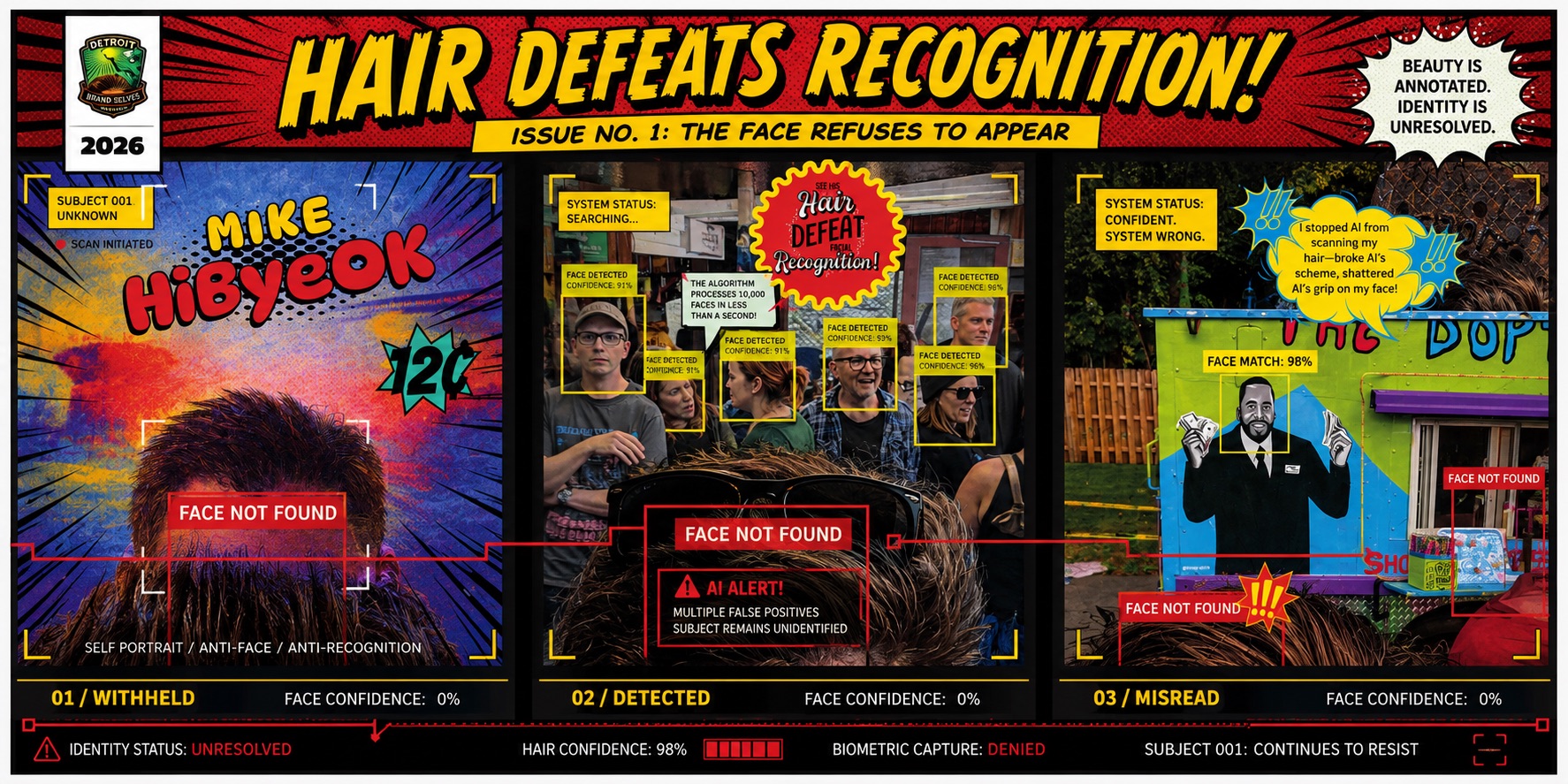
Hair selfies are repurposed as facial-detection theater in a three-panel comic built from the artist's eight-page Face Not Found publication. Recognition boxes and surveillance language stage a confrontation between detection systems and a subject who refuses to offer a face. The work presents that refusal as a comic narrative, not a documented technical test of recognition software.
Why it is here
The earlier photographic gesture becomes a comic argument about recognition. The panels stage withholding, detection and misreading; their confidence figures are rhetoric, not verified test results.
07 / 10
EAAS Soup
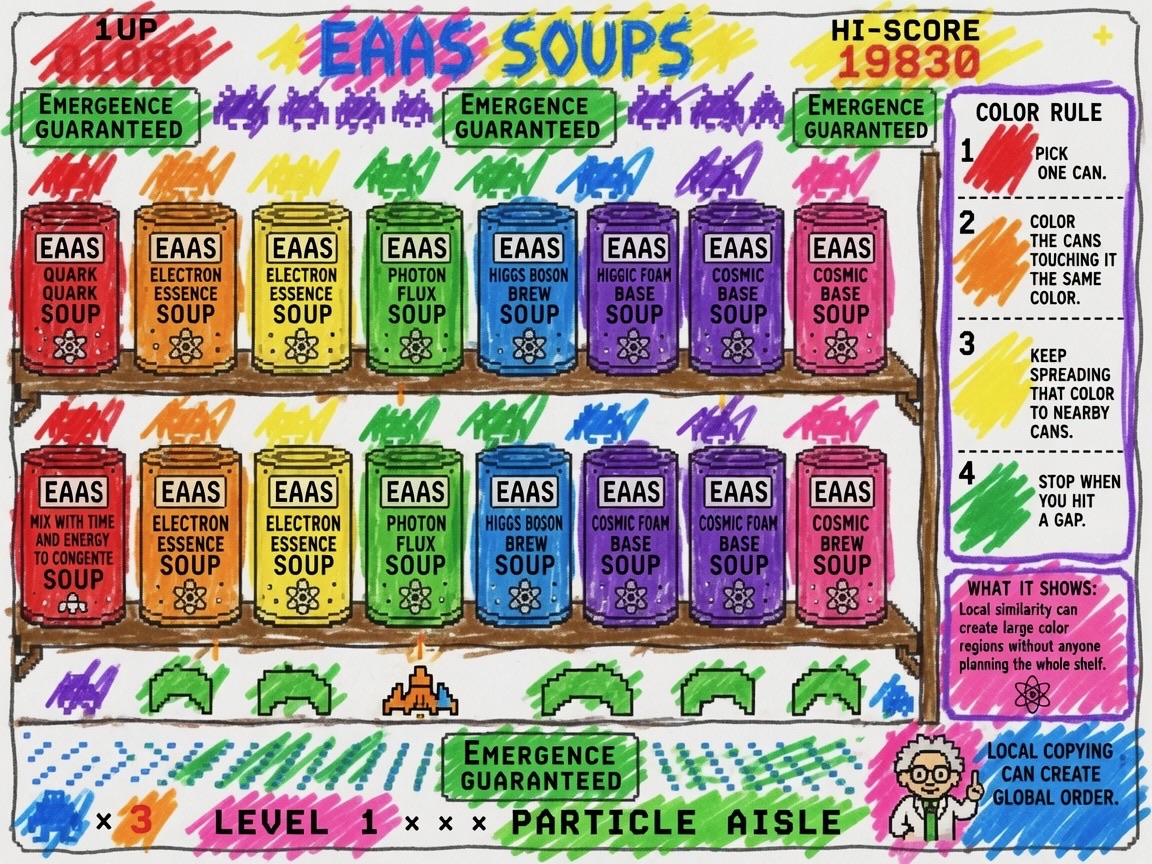
An explanatory system takes the form of a supermarket shelf and retro arcade imagery. The cans invoke physics and emergence rather than soup flavors. A coloring rule asks the participant to choose a can, extend its color to neighboring cans and stop at a gap, using local actions to suggest larger patterns. Its instructional form is part of the image; a functioning game or tested teaching program is not claimed.
Why it is here
An explanatory system appears as a supermarket shelf and arcade game. Repeated cans and a coloring rule connect classification, commercial promises and the pleasures of order.
08 / 10
Frootloop Rollercoaster
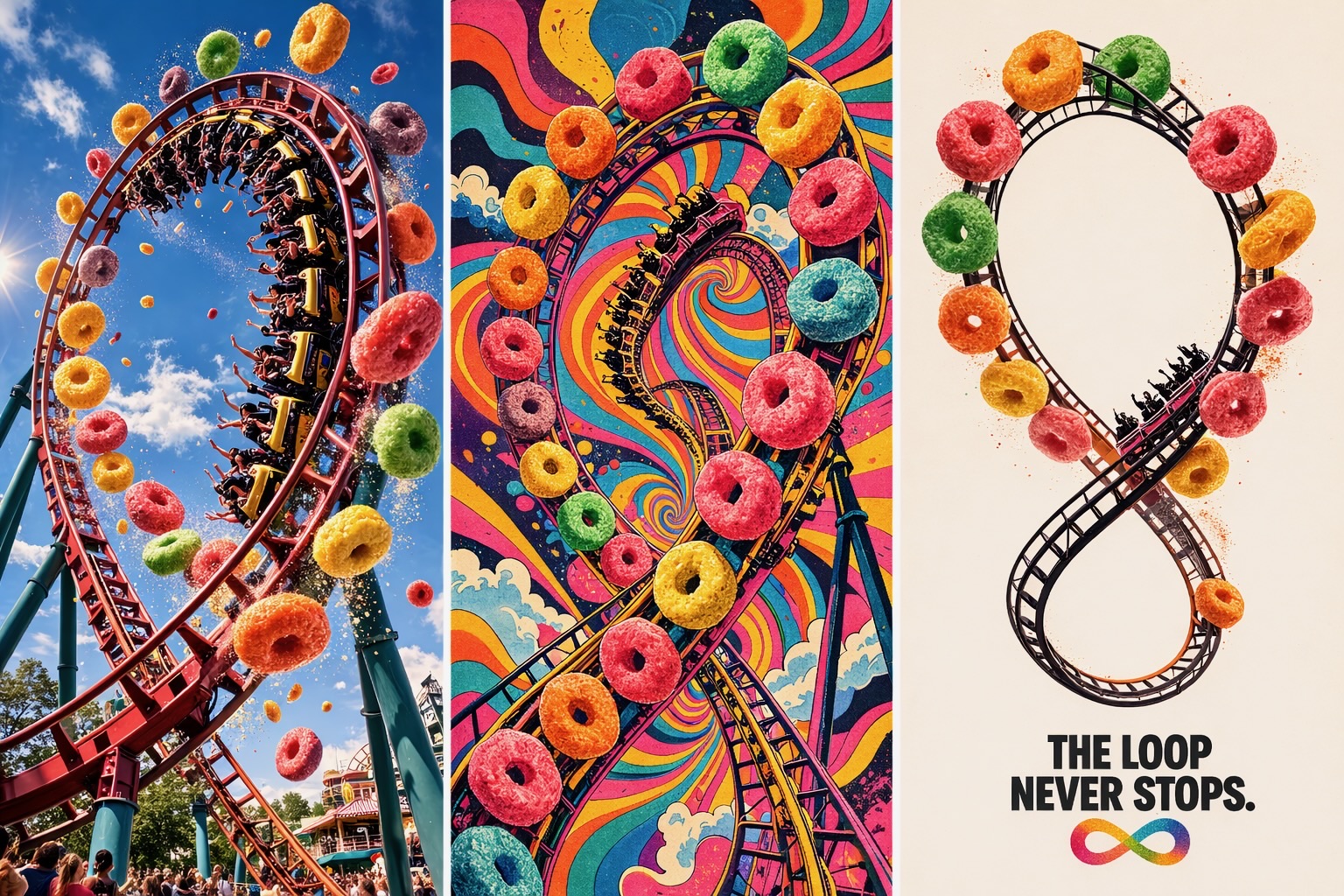
A three-panel poster for the artist's Frootloop rollercoaster work associated with the Community Art portion of BEEPLE: INFINITE_LOOP. Cereal rings move between rollercoaster spectacle, psychedelic pattern and an infinity-loop diagram. Sugary pleasure and the drama of a ride produce an advertising-like appeal, tempered by the possibility of excess and motion sickness.
Why it is here
Cereal and rollercoaster loops move across three visual idioms. The image keeps pleasure and advertising-like appeal visible within the practice, rather than treating them as embarrassments.
09 / 10
Infinite Frootpower
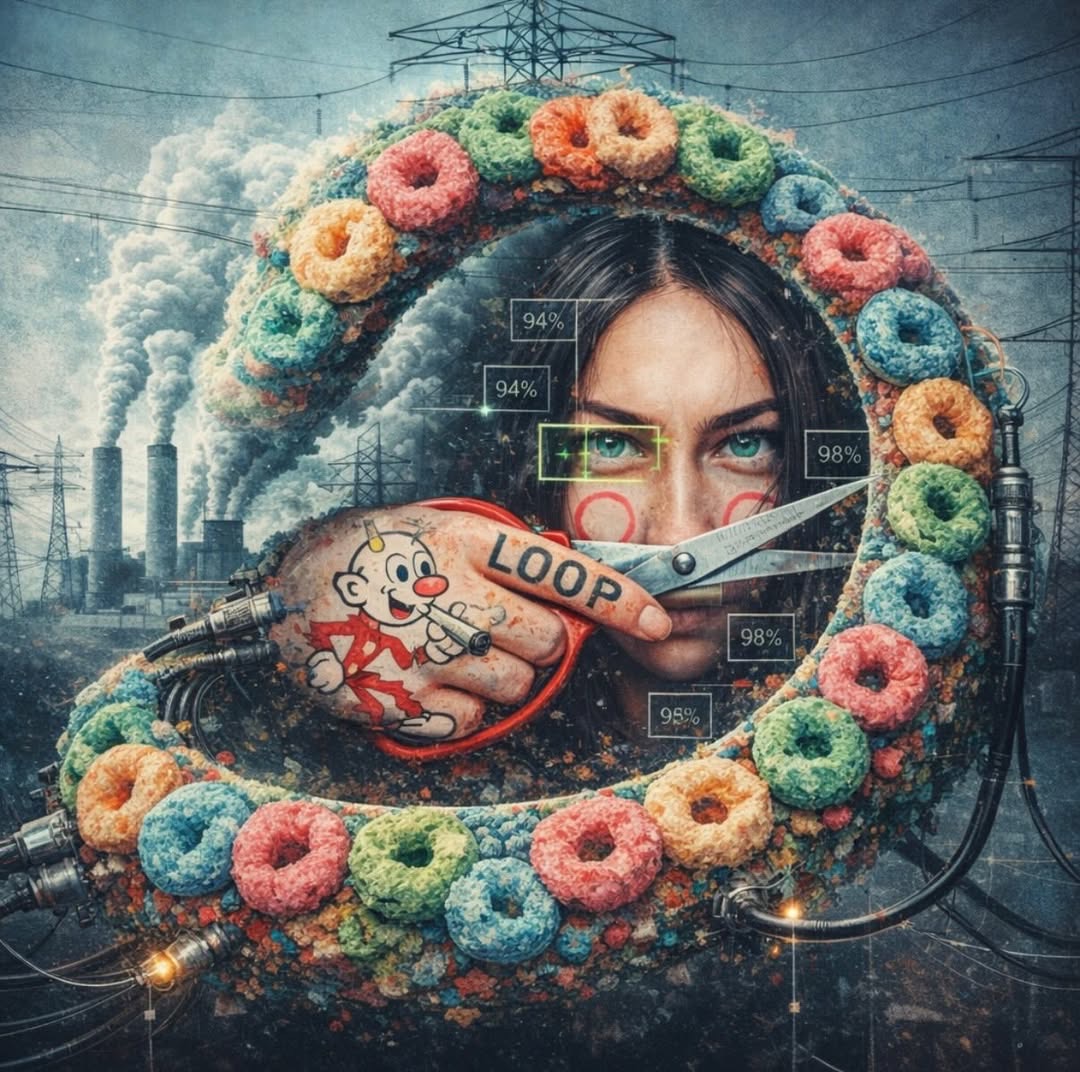
Sullivan combines his photograph of the Monroe coal plant, taken while traveling toward Charleston for the Shepard Fairey exhibition at Beeple Studios, with Froot Loops photographed at a hotel breakfast. A face, scissors and recognition boxes join the cereal ring and industrial setting. The montage places appetite for spectacle beside the energy and visibility that spectacle consumes.
Why it is here
The cheerful loop acquires an industrial setting, a face, scissors and recognition boxes. Its appetite for spectacle sits uneasily beside the energy and visibility it consumes.
10 / 10
Joe Jim Are in Trouble with the Man! Slop Comics No.1
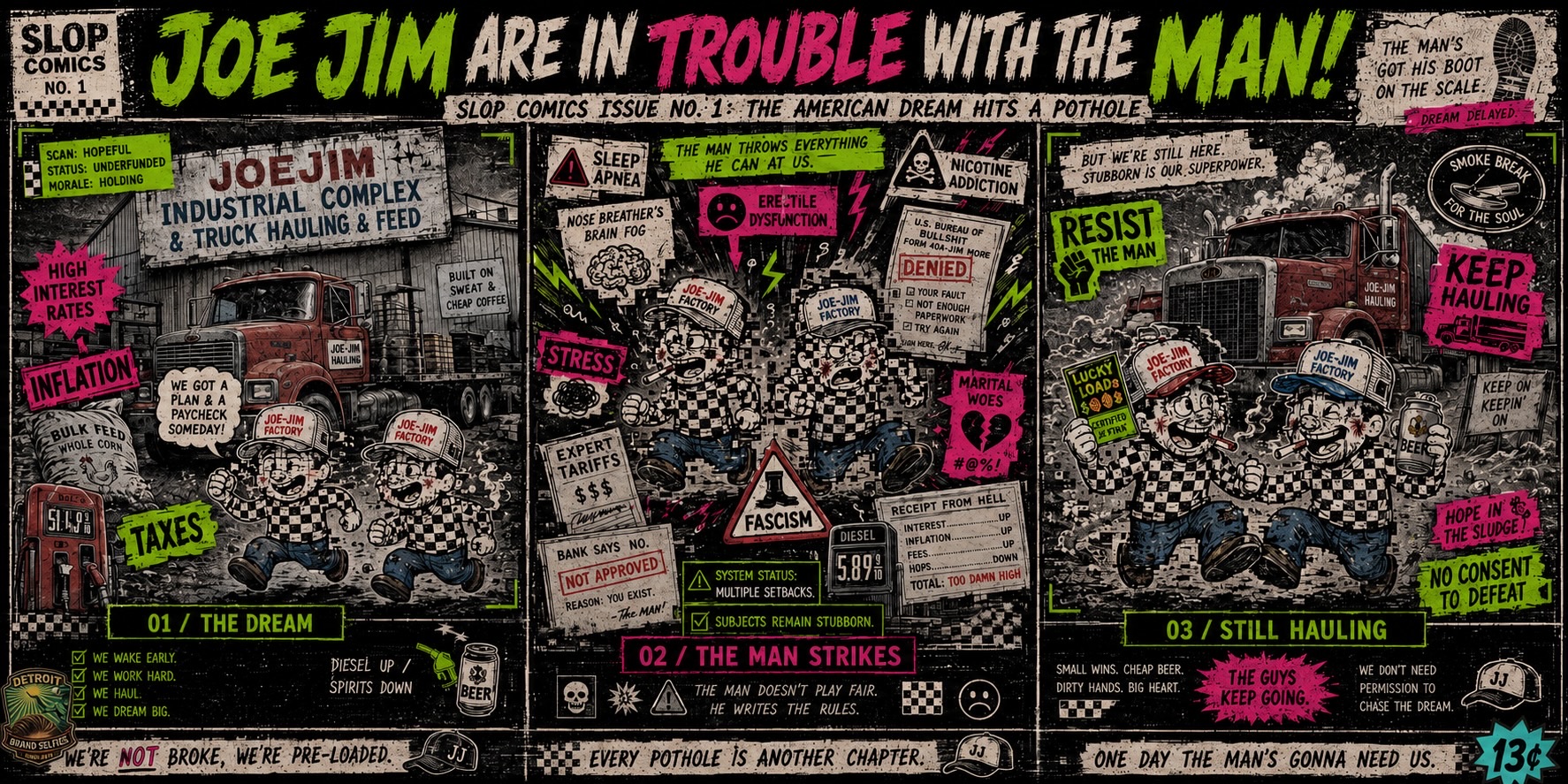
Two brothers, Joe and Jim, try to make a living amid trucks, bills, bodily complaints, bureaucratic refusals and accumulating setbacks. Their American dream hits a pothole, but the characters remain stubborn. The comic triptych brings the sequence back to ordinary survival, retaining frustration and endurance rather than resolving them in technological triumph.
Why it is here
Trucks, bills, complaints and stubborn characters bring the sequence back to people. The ending retains unresolved frustration and endurance rather than offering a clean technological victory.
← MIKEHIBYEOK.COM — the full archive